3D Printing in Orbit: Self-Replicating Satellites on the International Space Station

Jul 9, 2025 By

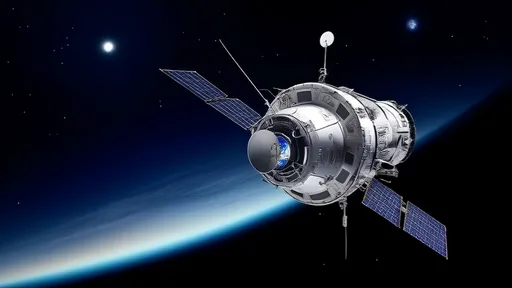
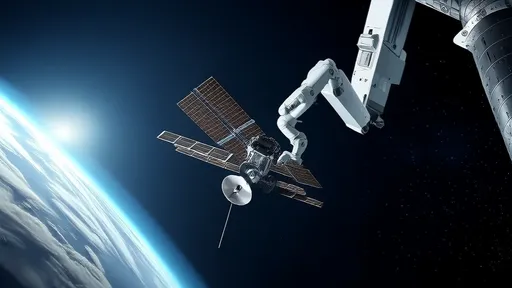
The concept of in-orbit 3D printing has taken a revolutionary leap forward with recent experiments aboard the International Space Station (ISS). Scientists and engineers are now exploring the possibility of satellite self-replication, a groundbreaking advancement that could redefine space exploration and manufacturing. This technology promises to transform how we approach satellite deployment, repair, and even deep-space missions.

At the heart of this innovation is the idea that satellites could one day manufacture copies of themselves in space. The ISS has become a testing ground for this futuristic vision, with astronauts and researchers working tirelessly to refine the processes involved. Using advanced 3D printing techniques, components can be fabricated in microgravity, paving the way for autonomous satellite replication.

The Challenges of Space-Based Manufacturing

Creating functional satellites in the harsh environment of space is no small feat. Traditional manufacturing methods rely on Earth's gravity and stable conditions, neither of which are available in orbit. Engineers have had to develop entirely new approaches to 3D printing that account for microgravity, extreme temperatures, and limited resources. The materials used must withstand cosmic radiation and the vacuum of space while maintaining structural integrity.

Another significant hurdle is power consumption. 3D printers require substantial energy to operate, and in space, every watt counts. Researchers are experimenting with solar-powered systems and energy-efficient printing methods to make the process sustainable. The ISS provides an ideal platform for these tests, offering both the microgravity environment and the necessary infrastructure to support such experiments.

Breakthroughs in Microgravity 3D Printing

Recent successes aboard the ISS have demonstrated that 3D printing in microgravity is not only possible but also highly effective. Astronauts have printed tools, spare parts, and even small satellite components with remarkable precision. These achievements are critical stepping stones toward the ultimate goal of self-replicating satellites. The ability to manufacture parts on-demand reduces the need for costly and risky resupply missions from Earth.

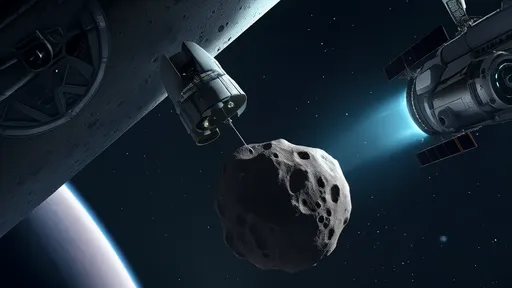
One of the most exciting developments is the use of recycled materials. Scientists are exploring ways to repurpose space debris and old satellite parts into raw materials for 3D printing. This approach not only addresses the issue of space junk but also creates a sustainable loop of resource utilization. Imagine a future where defunct satellites are broken down and rebuilt into new, functional ones—all without human intervention.

The Future of Autonomous Satellites

The implications of satellite self-replication are profound. Autonomous satellites capable of repairing or replicating themselves could extend mission lifespans indefinitely. Deep-space probes could launch with the blueprints for replacement parts, ensuring they remain operational for decades. Colonies on Mars or the Moon could leverage this technology to build infrastructure without relying on shipments from Earth.

However, this future is not without its ethical and logistical challenges. The idea of self-replicating machines raises questions about control and safety. How do we prevent unintended replication or malfunctions? International regulations will need to evolve to address these concerns, ensuring that space remains a safe and collaborative environment.

Collaboration and Next Steps

The journey toward fully autonomous satellite replication is a collaborative effort. Space agencies, private companies, and academic institutions worldwide are pooling their expertise to overcome technical barriers. The ISS serves as a unifying platform where these diverse teams can test and refine their ideas. Upcoming missions will focus on scaling the technology, moving from small components to entire satellites.

Public interest in these developments is growing, and for good reason. The ability to manufacture and replicate satellites in orbit could drastically reduce the cost of space exploration. It opens doors to missions that were previously deemed too expensive or impractical. As we stand on the brink of this new era, one thing is clear: the future of space technology is being written aboard the ISS, one 3D-printed layer at a time.
Recommend Posts
Science

Whale Song Translation Project: AI Decoding the Language of Sea Giants

By /Jul 9, 2025

In the depths of the world’s oceans, a symphony of sounds echoes through the water—a complex and mysterious language spoken by some of the planet’s most intelligent creatures. Whales, particularly humpbacks and sperm whales, communicate through intricate vocalizations known as whale songs. For decades, scientists have been captivated by these sounds, striving to understand their meaning. Now, with advancements in artificial intelligence, a groundbreaking initiative known as the Whale Song Translation Project is bringing humanity closer than ever to decoding the language of these marine giants.
Science

Voyager of the Solar System's Edge: Messenger to the Interstellar Realm Beyond the Heliopause

By /Jul 18, 2025

The vast expanse beyond our solar system has long captivated astronomers and space enthusiasts alike. For decades, the boundary where the Sun's influence wanes and interstellar space begins remained shrouded in mystery. Now, humanity's farthest-flung emissaries – the Voyager probes and newer interstellar scouts – are rewriting our understanding of this cosmic frontier.
Science

Galaxy Black Hole Panorama: Event Horizon Telescope Array Upgrade

By /Jul 18, 2025

The Event Horizon Telescope (EHT) collaboration, renowned for capturing the first-ever image of a black hole in 2019, has embarked on an ambitious upgrade to its global array. This enhancement aims to deliver unprecedented high-resolution imagery of Sagittarius A*, the supermassive black hole at the center of our Milky Way galaxy, as well as other cosmic phenomena. The project represents a leap forward in humanity’s quest to unravel the mysteries of spacetime, gravity, and the extreme environments surrounding these enigmatic celestial objects.
Science

Asteroid Composition Remote Sensing: Contactless Mining Exploration with Gamma-Ray Spectrometers

By /Jul 18, 2025

The silent ballet of asteroids drifting through the cosmos has long captivated scientists, but unlocking their mineral secrets without physical contact remains one of space exploration’s most tantalizing challenges. Recent advancements in gamma-ray spectroscopy are revolutionizing how we probe these celestial bodies, offering a glimpse into their composition from afar. This non-invasive technique is not just a scientific curiosity—it’s a pragmatic solution for future asteroid mining and planetary defense missions.
Science

Photon Entanglement Farm: Production Center for Large-Scale Quantum Networks

By /Jul 18, 2025

In a groundbreaking development that could redefine the future of quantum communication, researchers have unveiled the world's first "photon entanglement farm" – a dedicated facility designed to mass-produce entangled photon pairs for large-scale quantum networks. This cutting-edge facility represents a paradigm shift from laboratory-scale experiments to industrialized quantum resource production, potentially accelerating the advent of practical quantum internet.
Science

Infrasound Prediction: Monitoring Crustal Stress Before Volcanic Eruptions

By /Jul 9, 2025

The ground beneath our feet is never truly silent. Before a volcano erupts, the Earth begins to hum – not with sound we can hear, but with deep, rumbling infrasound waves that travel through the crust like a distress signal. These low-frequency vibrations, often below 20 Hz, may hold the key to predicting some of nature's most catastrophic events days or even weeks before they occur.
Science

Quantum Gyroscope Navigation: Deep-Sea Submersibles Without Satellite Positioning

By /Jul 18, 2025

The vast, uncharted depths of the ocean have long posed a formidable challenge for navigation. Traditional GPS systems, which rely on satellite signals, become useless beneath the waves, leaving deep-sea explorers and autonomous underwater vehicles (AUVs) to rely on less precise methods. However, a groundbreaking solution is emerging from the realm of quantum physics: the quantum gyroscope. This cutting-edge technology promises to revolutionize underwater navigation, enabling precise positioning without the need for satellite signals.
Science

Quantum Gravity Sensing Network: A Distributed Array for Monitoring Crustal Movements

By /Jul 18, 2025

In recent years, advancements in quantum sensing technology have opened new frontiers in geophysical monitoring. Among the most promising developments is the Quantum Gravity Sensing Network (QGSN), a distributed array designed to detect subtle changes in Earth's crust with unprecedented precision. Unlike traditional seismometers or GPS-based systems, QGSN leverages quantum interferometry to measure minute variations in gravitational forces, offering scientists a revolutionary tool for understanding tectonic activity, volcanic unrest, and even potential earthquake precursors.
Science

Cell Reprogramming Therapy: Conversion of Skin Cells to Cardiac Muscle Cells for Regeneration

By /Jul 10, 2025

The field of regenerative medicine has witnessed a groundbreaking advancement with the development of cellular reprogramming therapies, particularly the conversion of skin cells into functional cardiomyocytes. This innovative approach holds immense potential for treating heart diseases, which remain a leading cause of mortality worldwide. By harnessing the plasticity of somatic cells, scientists are now able to bypass ethical concerns associated with embryonic stem cells while offering personalized therapeutic solutions.
Science

Lunar Water Ice Refinery: Electrolysis Technology for In-Situ Resource Utilization

By /Jul 18, 2025

The dream of establishing a sustainable human presence on the Moon has long been hindered by the prohibitive costs of transporting resources from Earth. However, recent advancements in in-situ resource utilization (ISRU) technologies, particularly the extraction and electrolysis of lunar water ice, are bringing this vision closer to reality. Scientists and engineers are now focusing on developing efficient methods to refine water ice trapped in the Moon’s permanently shadowed regions (PSRs) into usable oxygen and hydrogen—key components for life support and rocket fuel.
Science

Insect Wing Biomimetics: Low-Energy Design for Micro Aerial Vehicles

By /Jul 18, 2025

The natural world has long served as a muse for engineers and scientists, offering elegant solutions to complex problems. Among the most fascinating inspirations is the flight of insects, whose wings have evolved over millions of years to achieve remarkable efficiency and maneuverability. As researchers delve deeper into the biomechanics of insect flight, a new frontier emerges: the design of micro aerial vehicles (MAVs) that mimic these tiny aviators. The implications are profound, particularly in the quest for low-energy flight systems that could revolutionize surveillance, environmental monitoring, and even medical applications.
Science

Exoplanet Weather Maps: Webb Telescope Models Cloud Dynamics

By /Jul 18, 2025

The James Webb Space Telescope (JWST) has once again pushed the boundaries of astronomical observation, this time by mapping the dynamic cloud systems of an exoplanet in unprecedented detail. This groundbreaking achievement offers scientists a rare glimpse into the atmospheric mechanics of worlds beyond our solar system, revealing weather patterns that defy Earthly comparisons.
Science

3D Printing in Orbit: Self-Replicating Satellites on the International Space Station

By /Jul 9, 2025

The concept of in-orbit 3D printing has taken a revolutionary leap forward with recent experiments aboard the International Space Station (ISS). Scientists and engineers are now exploring the possibility of satellite self-replication, a groundbreaking advancement that could redefine space exploration and manufacturing. This technology promises to transform how we approach satellite deployment, repair, and even deep-space missions.
Science

Gut Phageome: Viral Regulator of the Human Bacterial Ecosystem

By /Jul 10, 2025

The human gut is a bustling ecosystem teeming with trillions of microorganisms, including bacteria, viruses, and fungi. Among these, bacteriophages—viruses that specifically infect bacteria—play a pivotal yet often overlooked role in shaping our gut microbiota. Known collectively as the gut virome or phageome, these viral entities exert profound influence over bacterial populations, maintaining balance, driving evolution, and even impacting human health in ways we are only beginning to understand.
Science

Atmospheric River Forecasting: Precise Intervention Window for Artificial Precipitation Enhancement

By /Jul 18, 2025

The science of weather modification has entered a new era with the advent of advanced atmospheric river forecasting. As climate patterns grow increasingly erratic, the ability to predict and potentially influence precipitation events has become a critical tool for water resource management. Atmospheric rivers—those narrow corridors of concentrated moisture in the atmosphere—are now at the forefront of this technological revolution.
Science

Coral Reef Acoustic Ecology: Fish Vocalizations as Indicators of Ecosystem Health

By /Jul 18, 2025

The symphony of crackles, pops, and grunts emanating from coral reefs isn’t just underwater noise—it’s a vital sign of ecosystem health. Scientists are increasingly turning to bioacoustics to decode the complex soundscapes produced by reef-dwelling fish, uncovering a novel way to monitor the vitality of these fragile marine habitats. As coral reefs face unprecedented threats from climate change, overfishing, and pollution, the acoustic signatures of fish communities may offer an early warning system for ecological distress.
Science

Topological Quantum Catalysts: Exotic Electronic States Accelerating Chemical Reactions

By /Jul 18, 2025

In the high-stakes race to develop faster, cleaner chemical processes, scientists are turning to one of the most bizarre phenomena in quantum physics. A new class of materials called topological quantum catalysts is rewriting the rules of catalysis by harnessing exotic electron behaviors that occur at the atomic scale. These peculiar electronic states – long studied in theoretical physics – are now demonstrating an uncanny ability to accelerate industrial reactions while resisting degradation.
Science

Superconducting Quantum Memory: Information Retention Exceeds Hour-Long Duration

By /Jul 18, 2025

In a groundbreaking development that could redefine the future of quantum computing, researchers have achieved a remarkable milestone in the field of quantum memory. For the first time, scientists have demonstrated the ability to store quantum information in a superconducting quantum memory for over an hour—a leap that shatters previous records measured in mere seconds or minutes. This achievement opens new possibilities for long-distance quantum communication and large-scale quantum computing networks.
Science

Urban Mineral Extraction: Recovery of Rare Earth Elements from Demolished Buildings

By /Jul 18, 2025

The global demand for rare earth elements (REEs) has surged in recent years, driven by their critical role in high-tech industries, renewable energy systems, and advanced electronics. However, traditional mining practices for these valuable materials are often environmentally destructive and geopolitically contentious. In response, researchers and urban planners are turning their attention to an unconventional yet promising source: the discarded infrastructure of cities. The concept of "urban mining"—extracting valuable materials from waste streams—has gained traction, with a particular focus on reclaiming REEs from demolished or renovated buildings.
Science

Permafrost Carbon Release Model: The Methane Time Bomb of Permafrost Melting

By /Jul 18, 2025

The Arctic's frozen vaults are cracking open, and scientists are racing to understand the consequences. For millennia, vast stores of organic matter have been locked away in permafrost—ground that remains frozen for at least two consecutive years. Now, as global temperatures rise, this icy stronghold is giving way, releasing ancient carbon into the atmosphere in the form of methane, a greenhouse gas with a warming potential 28 times greater than carbon dioxide over a 100-year timescale.