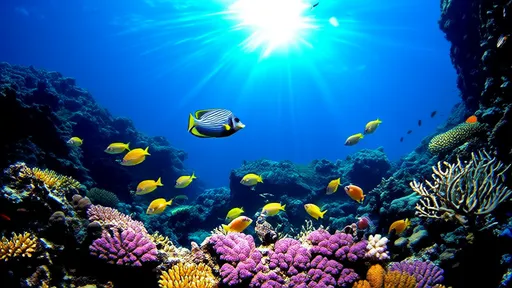
The symphony of crackles, pops, and grunts emanating from coral reefs isn’t just underwater noise—it’s a vital sign of ecosystem health. Scientists are increasingly turning to bioacoustics to decode the complex soundscapes produced by reef-dwelling fish, uncovering a novel way to monitor the vitality of these fragile marine habitats. As coral reefs face unprecedented threats from climate change, overfishing, and pollution, the acoustic signatures of fish communities may offer an early warning system for ecological distress.
The Coral Reef Soundscape: A Living Orchestra
Coral reefs are among the most acoustically diverse environments on Earth. Unlike the eerie silence often associated with deep ocean floors, shallow reef systems pulsate with life—both visible and audible. From the territorial drumming of damselfish to the coordinated choruses of clownfish, these vocalizations form a rich tapestry of biological noise. Researchers have identified over 800 fish species capable of producing purposeful sounds, using specialized organs like swim bladders or pharyngeal teeth. These aren’t random occurrences; sound production plays critical roles in mating rituals, territorial defense, and even cooperative hunting strategies.
What makes reef acoustics particularly fascinating is their diurnal rhythm. Dawn and dusk typically witness peak acoustic activity, as crepuscular hunters communicate and nocturnal species begin their shifts. Passive acoustic monitoring (PAM) devices deployed across Indo-Pacific and Caribbean reefs have revealed distinct "acoustic fingerprints" for healthy versus degraded ecosystems. Vibrant reefs maintain a balanced mix of high-frequency snaps (indicative of shrimp activity) and low-frequency fish calls, while stressed reefs exhibit acoustic gaps—missing frequencies that correlate with declining species diversity.
Decoding the Silent Crisis
The quieting of reefs speaks volumes about their declining health. A 2023 study across the Great Barrier Reef documented a 15% reduction in acoustic complexity following coral bleaching events. Certain specialist fish species—like the chattering butterflyfish—fall silent months before visible coral degradation occurs. This phenomenon creates an acoustic early-warning system far more sensitive than traditional visual surveys. Marine biologists now use machine learning algorithms to analyze thousands of hours of reef recordings, identifying subtle shifts in acoustic biodiversity that precede ecological tipping points.
Climate change compounds these acoustic changes in unexpected ways. Ocean acidification, for instance, alters how sound propagates underwater while simultaneously impairing fish hearing capabilities. Some species compensate by increasing call amplitude or frequency—an acoustic version of the "Lombard effect" observed in humans shouting over noise. However, this adaptation comes at significant metabolic cost, potentially diverting energy from growth and reproduction. The resulting population declines create a feedback loop: fewer vocalizing fish lead to quieter reefs, which in turn reduces habitat cues for larval fish seeking settlement sites.
Conservation Through Sound
Innovative conservation strategies are emerging from this research. In Indonesia’s Spermonde Archipelago, scientists play back healthy reef soundscapes to attract fish larvae to degraded areas—a technique showing 40% higher recruitment rates compared to silent control sites. Other projects deploy "acoustic enrichment" on artificial reefs, essentially using sound to jumpstart ecological recovery. The approach capitalizes on the fact that many reef fish larvae navigate using acoustic cues during their critical settlement phase.
Local communities are becoming active participants in acoustic monitoring. Citizen science programs train fishers to deploy hydrophones and transmit recordings via smartphone apps, creating real-time sound maps of reef health. This democratization of data collection proves particularly valuable in marine protected areas (MPAs), where acoustic baselines help assess conservation effectiveness. Preliminary results suggest MPAs with robust fish vocal activity recover three times faster from thermal stress events compared to unprotected reefs.
The future of reef acoustics research holds even greater promise. Emerging technologies like autonomous surface vehicles equipped with directional hydrophones can track individual fish calls across vast reef systems. Advanced bioacoustic indices now separate anthropogenic noise (from boats or construction) from biological sounds, enabling more precise impact assessments. As these tools mature, they may transform how we perceive—and protect—the living soundscapes of coral reefs worldwide.
By /Jul 9, 2025

By /Jul 18, 2025

By /Jul 18, 2025
By /Jul 18, 2025

By /Jul 18, 2025

By /Jul 9, 2025

By /Jul 18, 2025

By /Jul 18, 2025

By /Jul 10, 2025

By /Jul 18, 2025
By /Jul 18, 2025

By /Jul 18, 2025

By /Jul 9, 2025

By /Jul 10, 2025

By /Jul 18, 2025
By /Jul 18, 2025

By /Jul 18, 2025

By /Jul 18, 2025

By /Jul 18, 2025

By /Jul 18, 2025