In recent years, advancements in quantum sensing technology have opened new frontiers in geophysical monitoring. Among the most promising developments is the Quantum Gravity Sensing Network (QGSN), a distributed array designed to detect subtle changes in Earth's crust with unprecedented precision. Unlike traditional seismometers or GPS-based systems, QGSN leverages quantum interferometry to measure minute variations in gravitational forces, offering scientists a revolutionary tool for understanding tectonic activity, volcanic unrest, and even potential earthquake precursors.
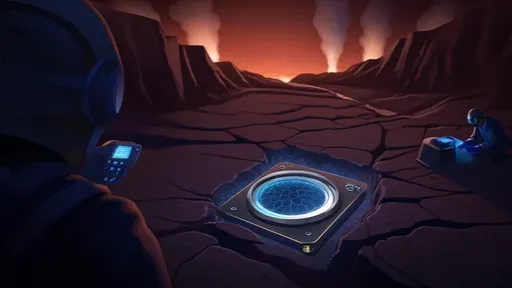
The core principle behind QGSN lies in its ability to exploit the wave-like nature of matter. By using ultra-cold atoms in free fall, these sensors can detect infinitesimal shifts in gravitational acceleration caused by mass redistributions beneath the Earth's surface. When deployed as a networked array across geologically active regions, the system creates a high-resolution map of crustal dynamics in near real-time. Early deployments along the Pacific Ring of Fire have already demonstrated the technology's capability to identify strain accumulation along fault lines weeks before conventional systems show significant activity.
What sets this system apart is its resilience to environmental noise that typically plagues traditional monitoring methods. Quantum gravity sensors are inherently insensitive to surface vibrations, electromagnetic interference, and atmospheric conditions that degrade the performance of seismographs and satellite-based systems. This allows for continuous monitoring even during severe weather events or in urban environments where conventional instruments would be overwhelmed by anthropogenic noise.
The distributed nature of the array provides another critical advantage. By correlating data from multiple nodes separated by hundreds of kilometers, researchers can distinguish between local gravitational anomalies and broader tectonic movements. This network approach enables the detection of deep crustal processes that were previously inaccessible, such as the movement of magma chambers at depths exceeding 20 kilometers. Recent data from Iceland's volcanic zones has revealed previously undetectable patterns in magma migration, offering new insights into eruption forecasting.
Implementation challenges remain significant, particularly in maintaining the delicate quantum states required for measurement in field conditions. The current generation of sensors requires sophisticated laser cooling systems and vibration isolation that demand careful engineering for remote deployment. However, ongoing miniaturization efforts are producing increasingly robust packages, with prototype systems now operating autonomously for months at remote monitoring stations.
Beyond academic research, the technology holds immense potential for disaster mitigation. Insurance companies and government agencies are particularly interested in the system's ability to provide early warnings for subsidence events in urban areas. In Tokyo, preliminary installations have detected subtle ground deformation patterns that correlate with subsequent building damage, suggesting the possibility of predictive maintenance schedules for critical infrastructure.
The quantum gravity network also promises to resolve long-standing debates in geodynamics. By providing direct measurements of mass flux rather than inferring movements from surface displacements, the data could finally answer questions about the mechanisms driving continental drift and the distribution of stresses across plate boundaries. Some researchers speculate the system might even detect the gravitational signatures of deep-Earth processes, potentially offering clues about the nature of the mantle-core boundary.
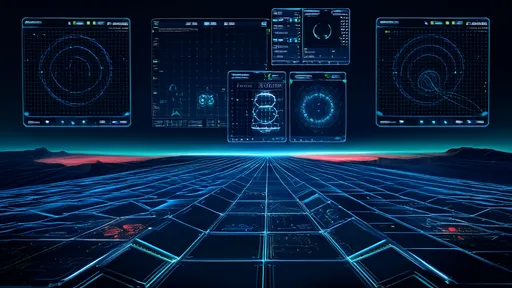
As the network expands, data integration poses both technical and conceptual challenges. The vast streams of quantum measurement data require novel analysis techniques, prompting collaborations between geophysicists and machine learning specialists. Early results suggest that pattern recognition algorithms can extract meaningful signals from what initially appears as noise, revealing complex interactions between different crustal layers.
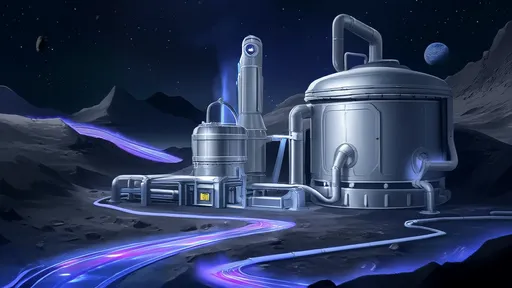
Looking ahead, the vision extends beyond terrestrial applications. Modified versions of the quantum gravity array could monitor lunar crustal movements for future moon bases or detect subsurface oceans on icy moons in the outer solar system. The technology represents more than just an incremental improvement in monitoring—it offers an entirely new sensory modality for exploring planetary interiors, with implications that may ultimately reach far beyond our own world.
While still in its relative infancy, the Quantum Gravity Sensing Network has already demonstrated capabilities that challenge conventional paradigms in geophysical monitoring. As the technology matures and deployment scales, it may fundamentally transform our understanding of planetary dynamics and our ability to anticipate geological hazards. The coming decade will likely see quantum sensing move from laboratory curiosity to cornerstone technology in earth sciences.

By /Jul 9, 2025
By /Jul 18, 2025
By /Jul 18, 2025
By /Jul 18, 2025
By /Jul 18, 2025
By /Jul 9, 2025

By /Jul 18, 2025
By /Jul 18, 2025

By /Jul 10, 2025
By /Jul 18, 2025

By /Jul 18, 2025
By /Jul 18, 2025
By /Jul 9, 2025

By /Jul 10, 2025
By /Jul 18, 2025

By /Jul 18, 2025
By /Jul 18, 2025
By /Jul 18, 2025
By /Jul 18, 2025
By /Jul 18, 2025