The human gut is a bustling ecosystem teeming with trillions of microorganisms, including bacteria, viruses, and fungi. Among these, bacteriophages—viruses that specifically infect bacteria—play a pivotal yet often overlooked role in shaping our gut microbiota. Known collectively as the gut virome or phageome, these viral entities exert profound influence over bacterial populations, maintaining balance, driving evolution, and even impacting human health in ways we are only beginning to understand.
The Silent Regulators of the Gut
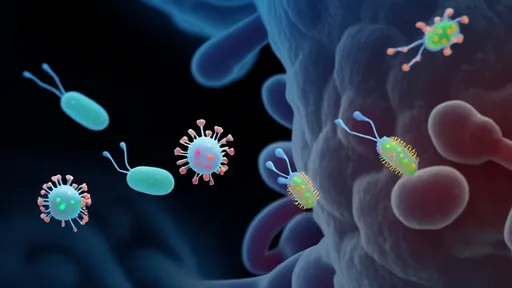
Bacteriophages are the most abundant biological entities on Earth, and the human gut is no exception. Outnumbering bacteria by at least tenfold, they act as silent regulators, selectively targeting and lysing bacterial hosts. This dynamic interaction creates a constant push-and-pull within the gut ecosystem, preventing any single bacterial species from dominating while fostering diversity. Unlike antibiotics, which indiscriminately wipe out bacteria, phages are precision hunters, making them key players in maintaining microbial equilibrium.
The relationship between phages and their bacterial hosts is far from static. Bacteria evolve resistance mechanisms to evade phage predation, while phages counter with genetic adaptations to reinfect. This arms race drives microbial evolution at an accelerated pace, contributing to the remarkable plasticity of the gut microbiome. Researchers have observed that phage populations can shift dramatically in response to dietary changes, antibiotic use, or disease states, suggesting their role as sensitive biomarkers and potential therapeutic targets.
Phages as Guardians of Gut Health
Emerging evidence highlights the gut phageome's involvement in human health beyond mere bacterial regulation. Certain phages have been found to modulate immune responses by interacting with gut-associated lymphoid tissue. Others influence metabolic pathways by altering the bacterial composition responsible for digesting complex carbohydrates or producing essential vitamins. In some cases, phages may even translocate across the gut barrier, though the implications of this phenomenon remain under investigation.
One fascinating aspect of phage biology is their ability to carry auxiliary metabolic genes—genetic material that can augment bacterial functions. For instance, some gut phages encode enzymes involved in carbohydrate metabolism, effectively expanding the metabolic repertoire of their bacterial hosts. This symbiotic relationship may enhance the host's ability to extract energy from otherwise indigestible dietary components, potentially influencing weight gain or loss.
The Dark Side of Phage Activity
Not all phage activities are beneficial. Under certain conditions, phage predation can disrupt microbial balance, potentially contributing to dysbiosis—a state of microbial imbalance linked to various diseases. Some studies suggest that phage-induced lysis of beneficial bacteria might create ecological niches for pathogenic species to flourish. Additionally, phages can serve as vectors for horizontal gene transfer, shuttling antibiotic resistance genes or virulence factors between bacterial populations.
The gut phageome's complexity is further compounded by the presence of temperate phages—viruses capable of integrating into bacterial genomes as prophages. These dormant phages can remain latent for generations before reactivating, sometimes carrying bacterial genes with them during excision. This process, known as transduction, represents another mechanism by which phages influence bacterial evolution and, by extension, human health.
Harnessing Phages for Therapeutic Potential
The growing understanding of gut phages has sparked interest in phage-based therapies. Phage cocktails designed to target specific pathogenic bacteria while sparing beneficial microbes could offer a more nuanced alternative to antibiotics. Early clinical trials have shown promise in treating antibiotic-resistant infections, and researchers are exploring applications for inflammatory bowel diseases, obesity, and even neurological disorders through the gut-brain axis.
However, significant challenges remain. The gut phageome is highly personalized, varying dramatically between individuals based on diet, geography, and lifestyle. This variability complicates the development of universal phage therapies. Moreover, our ability to culture many gut bacteria—and their associated phages—in laboratory settings remains limited, hindering comprehensive studies of phage-host interactions.
Advanced sequencing technologies and bioinformatics tools are gradually lifting the veil on this complex viral universe. Metagenomic analyses have revealed thousands of previously uncharacterized phage genomes in human gut samples, many representing entirely novel viral families. As these tools improve, so too does our capacity to decipher the intricate relationships between phages, bacteria, and human physiology.
The Future of Gut Phage Research
Looking ahead, researchers aim to move beyond cataloging phage diversity to understanding functional significance. How do specific phages influence microbial networks? Can we predict phage behavior based on genomic signatures? What role do phages play in early microbiome development? Answering these questions could revolutionize our approach to microbiome-related health conditions.
Personalized phage modulation may one day become a reality, with therapies tailored to an individual's unique microbial and viral profile. Meanwhile, dietary interventions designed to nurture beneficial phage communities could emerge as a strategy for maintaining gut health. As we continue to unravel the mysteries of the gut phageome, one thing becomes clear: these viral entities are far more than mere parasites—they are essential architects of our inner microbial world.

By /Jul 9, 2025

By /Jul 18, 2025

By /Jul 18, 2025

By /Jul 18, 2025

By /Jul 18, 2025

By /Jul 9, 2025

By /Jul 18, 2025

By /Jul 18, 2025
By /Jul 10, 2025

By /Jul 18, 2025

By /Jul 18, 2025

By /Jul 18, 2025

By /Jul 9, 2025
By /Jul 10, 2025

By /Jul 18, 2025

By /Jul 18, 2025
By /Jul 18, 2025

By /Jul 18, 2025

By /Jul 18, 2025

By /Jul 18, 2025